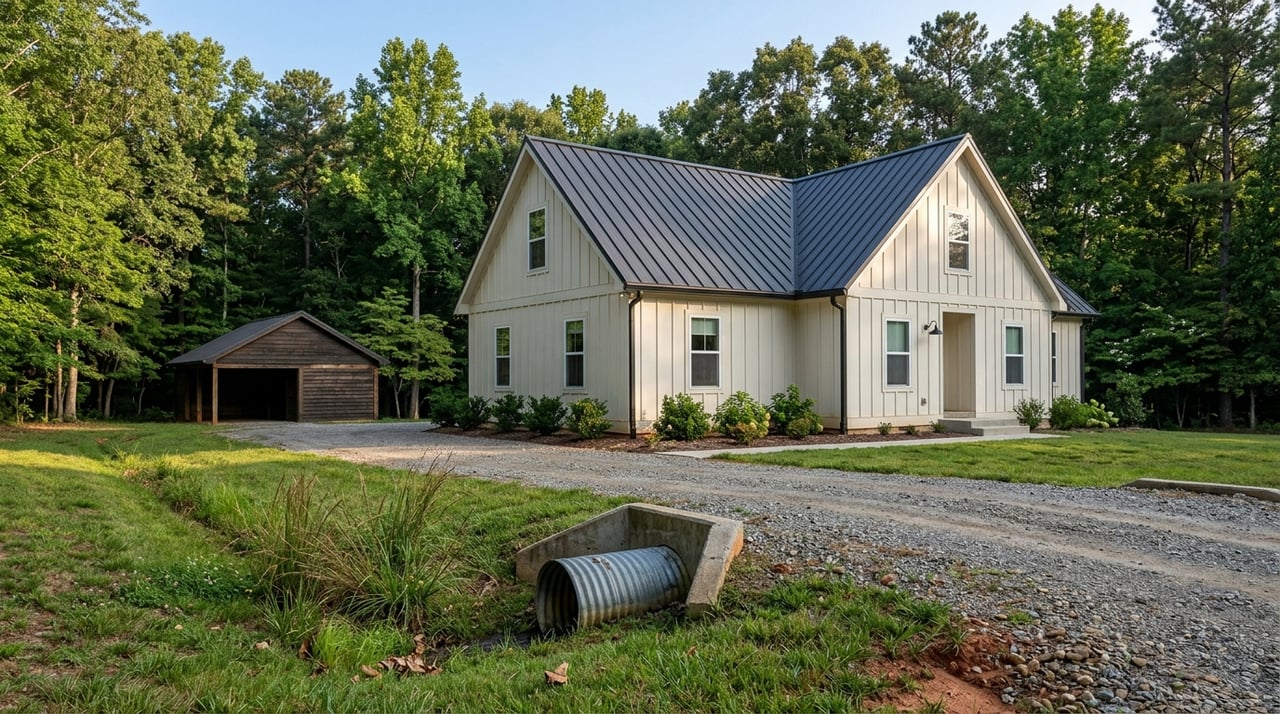
How to Buy Land in Taylorsville: Key Steps to Know
Buying a piece of land or a mini-farm in Taylorsville can feel like a dream come true, until you realize how many details can affect whether that dream actually works. If you are hoping to build, keep animals, start a small farm operation, or simply enjoy more space, you need to know more than just the price and acreage. This guide will walk you through the key steps to evaluate land in the Township of Taylorsville so you can move forward with more confidence. Let’s dive in.
Before you fall in love with a property, confirm where the parcel is regulated and how it is zoned. In the Taylorsville area, that starts with figuring out whether the land is inside the Town of Taylorsville limits, in the ETJ, or in unincorporated Alexander County. According to the Town of Taylorsville planning and development information, the town contracts with Alexander County for zoning permits and enforcement, but jurisdiction still matters for how decisions such as rezoning are handled.
You should also verify zoning by street address, PIN, or parcel ID in the county GIS. That is important because overlay districts can add restrictions beyond the base zoning district. A parcel that looks perfect for a mini-farm on first glance may have added requirements that affect building, access, or future use.
Zoning review is not just about building a house. Alexander County notes that zoning permits are generally required for new buildings, additions, manufactured homes, garages, pools, storage buildings, permanent signs, and changes in land use, according to the Alexander County Planning Department.
For buyers looking at mini-farm use, there is an important distinction. Certain farm structures and farming activities may be exempt, and for bona fide farms, agritourism farms, and state-certified agriculture, some parts of the code do not regulate the farm use itself. Still, non-farm uses may remain subject to local code, so it is smart to confirm exactly what your intended use includes.
If you are buying a larger tract with the idea of creating more than one homesite, ask that question right away. Subdivision rules can affect road standards, private road design, and access requirements long before construction begins.
The Alexander County Land Development Code includes subdivision road standards, private road rules, and access-management provisions. In plain terms, that means a property may look divisible on paper but still require additional design work or approvals before you can legally split it or build on multiple portions.
One of the biggest land-buying mistakes is assuming a parcel will support the kind of home you want without confirming septic feasibility. In Alexander County, Environmental Health handles septic and well evaluations, and the county makes an important distinction between two types of septic approvals.
Per the county’s Septic Information Sheet, an Improvement Permit is informational only, while an Authorization to Construct allows installation of the septic system and is valid for five years as long as lot conditions do not change. That difference matters if you are trying to understand whether a property is merely evaluated or actually closer to build-ready.
For a site visit, the county wants a scaled plat or site plan showing proposed structures, driveways, dedicated rights-of-way, wastewater-system location, setbacks, and nearby wells, streams, and lakes. If those pieces are missing, your review can be delayed.
The county also warns buyers not to grade or fill the lot before the environmental health visit. Doing so can void a permit or make approval impossible. If you are considering a parcel that has already been altered, that is a smart point to investigate before moving ahead.
If the property will need a private well, timing matters. Alexander County says the well permit should be applied for at the same time as the septic permit so the well site can be reviewed during the same visit, based on the county’s environmental health guidance.
This step is especially important on rural parcels where house placement, septic area, and well location all need to work together. A nice-looking homesite can become more complicated if those pieces compete for space or setback clearance.
Land with a rural or agricultural history may come with legacy issues you cannot see from the road. Under North Carolina law, a local health department field investigation is required before a private well construction permit is issued, and that review includes checking for abandoned wells. The law can require proper closure before a new permit moves forward, as outlined in North Carolina General Statutes, Article 7.
The same law also requires new private wells to be tested for a standardized set of contaminants after construction. For added due diligence, the state points buyers toward the NC DEQ Well Permit Decision Tool process for identifying known contamination sources near a proposed well site.
A parcel is only as practical as its access. When you are evaluating land or a mini-farm, ask whether access comes from a state-maintained road or from a private road or driveway easement. The answer affects what permits or documents you may need.
If the property needs access onto a North Carolina state-maintained road, NCDOT requires a driveway permit for new access or changes to existing access. NCDOT says the permit reviews items such as safety, drainage, traffic impacts, and design, and there is no application fee for the permit itself.
If access is private, pay close attention to what is recorded and who is responsible for upkeep. The county’s land development code states that private driveway easements must be shown on the plat, must state who maintains them, and must allow clear passage for emergency vehicles.
That means your questions should go beyond “Can I get there?” You also want to know who owns the access, whether maintenance is clearly assigned, and whether the easement is legally recorded. Those details matter for daily use, financing, and emergency response.
Financing land or a mini-farm is not always the same as financing a traditional home purchase. The type of property and your intended use can change which loan programs may fit best.
The research shows that land loans, farm loans, and rural home loans are separate lending buckets, so you should tell your lender exactly what the property will be used for. Farm Credit of North Carolina offers land, home, and farm loans, while the North Carolina Agricultural Finance Authority Series I Farm Real Estate loan program may apply to buying, improving, or enlarging farms, along with farm homes, service buildings, on-farm water supplies, and conservation improvements.
If the property includes a home or is intended as a homesite, the USDA Section 502 Direct Home Loan program may be relevant in eligible rural areas. USDA states that funds can be used to buy homes, build or relocate a home, and prepare a site, including water and sewage facilities, and that no down payment is typically required for the program.
A lender will want to know whether the parcel is raw land, a farm tract, a future homesite, or a home-plus-acreage purchase. That classification can affect the loan path, title review, and even permit expectations.
If you are not sure how a property should be categorized, it helps to clarify that before making an offer. It can save time, reduce surprises, and help you focus on properties that truly fit your budget and plans.
Before you move forward on land or a mini-farm in Taylorsville, make sure you can answer these practical questions:
These are not small details. They are the questions that help you separate a promising parcel from one that may bring costly delays or limitations later.
Buying land in Taylorsville takes a little more digging than buying an existing home, but that extra diligence can pay off in a big way. When you confirm zoning, septic potential, well placement, access, and financing early, you put yourself in a much stronger position to make a smart decision.
If you are exploring land, acreage, or mini-farm opportunities in Alexander County and want a local guide through the process, RE/MAX Legendary is here to help you evaluate the details and move forward with confidence.
Our agents will secure you a property in this seller's market OR call on one of our legendary agents to give you a free value of what your house is worth. You might be surprised what your house is worth in today's market.